Approving a Lighting Sample So the Delivery Matches It
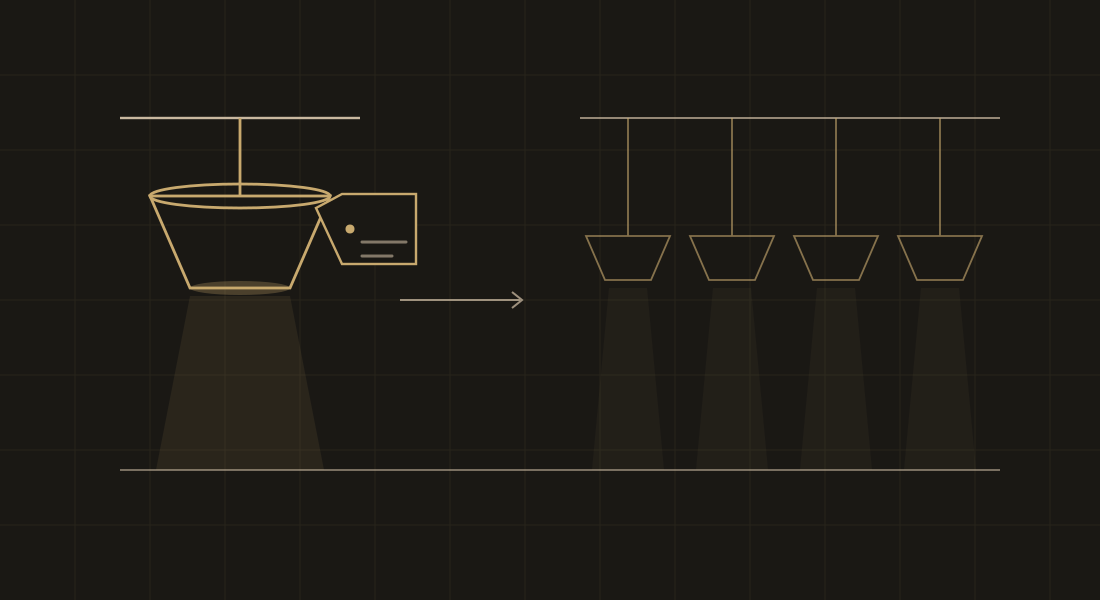
The sample arrives, it is beautiful, everyone signs off. Four months later the crates open and the finish is not quite the same, the diffuser is a shade cooler, the arms sit at a slightly different angle. Nobody lied. The sample was made by the workshop's best hand, without a deadline, in a quantity of one.
The trade calls the gap quality fade, and it is the most common failure in hospitality procurement. It is not prevented by choosing a better maker. It is prevented by leaving yourself something to argue with.
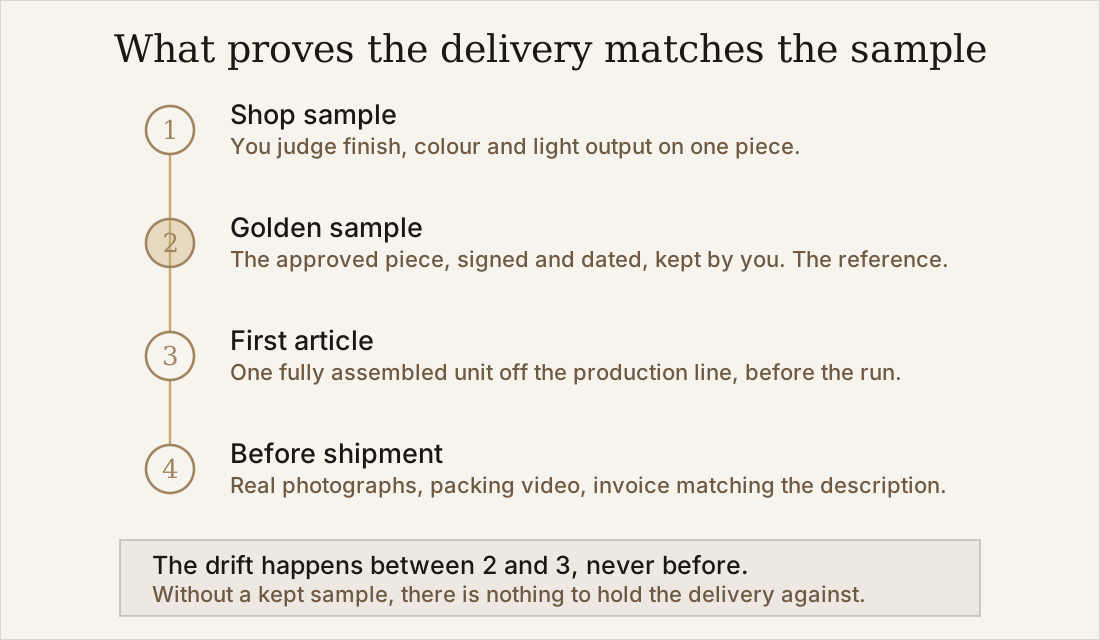
The four stages, and the one that matters
Only the second one is a decision. The others are checks against it.
1. The shop sample
One piece, made to show you finish, colour and light output. Judge it lit, in the light temperature of the room it is meant for, not on a workshop bench under daylight. A brass that reads warm at 2700 K reads green at 4000 K.
2. The golden sample
This is the whole method in one object. The approved piece is signed, dated and physically kept by you, not photographed and returned. It becomes the reference against which the delivery is measured, and it is the only artefact that survives a change of contact, a change of workshop foreman or a change of season.
If keeping the piece is impossible, because it is a two metre chandelier, keep a signed and dated finish panel plus a component sample: the shade material, the metal finish coupon, the diffuser, the cable. That is nine tenths of what actually drifts.
3. The first article
A shop sample is not a production piece. The first article is one fully assembled unit taken off the production line, before the run, with production tooling, production labour and production materials. It is the piece that tells you whether the workshop can repeat itself at volume.
Ask for it as a condition, not a favour, and give it a name in the order. A maker who treats a first article as an imposition is telling you something useful.
4. Before shipment
Four documents, every time, whatever the relationship:
- real photographs of the finished goods, not catalogue renders;
- the final specification sheet and the packaging specification;
- a video of the pieces being packed into their cartons;
- an invoice whose description matches the goods exactly.
The packing video is the one people skip and the one that pays. Most damage on decorative lighting is packing damage, and once a crate is open at destination nobody can prove how it left.
What makes any of this enforceable
Here is the part that gets left out of procurement guides. Every check above assumes you still have leverage when the check happens. Two clauses commonly remove it.
- Payment in full at order. Common in this trade, and it means the money is gone before the first article exists. The normal counter proposal is a staged payment with the last tranche against pre-shipment inspection.
- Warranty phrased as resolution by negotiation. Read it literally: it is not a commitment to take anything back. If physical return matters, it has to be written as physical return.
Both are negotiable. Neither is negotiable after you have paid. The same conditions, and why they exist, are covered in what contract lighting means.
When not to bother
This whole apparatus is built for custom pieces made to order. For a catalogue reference bought in a run of twelve, from a maker who holds stock and a certificate, it is disproportionate: order two, look at them, and buy the rest. Applying a first article protocol to a stocked product is how procurement earns its reputation for slowing everyone down.
Next step
The brief builder writes the specification a maker needs before a sample is worth requesting.
Open the lighting brief builder
The commercial conditions and the pre-shipment document list come from our own sourcing work and from proformas we have read in this trade. To discuss a project, use the sourcing request form.